
🏆 From British Garrison Grounds to Global Glory: India’s Football Journey 🇮🇳
India’s football story is a rollercoaster ride of emotions. From the early days of barefoot players outmaneuvering their colonial masters to the golden era of the 1950s and 60s, when India was dubbed the “Brazil of Asia.” Then came the fall from grace, leaving fans and players alike wondering: could India ever reclaim its footballing glory? Now, as we witness a modern revival, with state-of-the-art stadiums and a new generation of talent, the question on everyone’s mind is: What does the future hold for Indian football? Join us as we explore the fascinating history of football in India, from its humble beginnings to its promising future, and discover how innovations like the Vector X Orion TPU Machine Stitched Football are shaping the game’s evolution.
Early Beginnings of Football in India
A. Introduction of the sport by British colonizers
Football’s journey in India began in the mid-19th century, brought by British colonizers who introduced the sport to the subcontinent. Initially played in military cantonments and elite clubs, football quickly captured the imagination of the local population.
B. Formation of the first Indian football clubs
As the sport gained popularity, the first Indian football clubs emerged:
- Calcutta Football Club (1872)
- Mohun Bagan Athletic Club (1889)
- East Bengal Club (1920)
C. Emergence of local tournaments and leagues
The growing enthusiasm for football led to the establishment of various tournaments and leagues:
- Durand Cup (1888): Asia’s oldest football tournament
- IFA Shield (1893): Prestigious tournament organized by Indian Football Association
- Calcutta Football League (1898): One of the oldest football leagues in Asia
These competitions provided a platform for Indian players to showcase their skills and helped in the development of the sport across the country. As football’s popularity spread beyond Calcutta (now Kolkata), other regions began organizing their own tournaments, laying the foundation for a nationwide football culture.
Rise of Indian Football (1900-1950)
A. Establishment of All India Football Federation (AIFF)
he All India Football Federation (AIFF) was founded in 1937, marking a significant milestone in the organization of football in India. This national governing body played a crucial role in standardizing rules, organizing competitions, and promoting the sport across the country.
B. India’s first international match
India’s debut on the international football stage came in 1938 when they played against Australia in Sydney. This match was a turning point for Indian football, showcasing the country’s talent and potential on a global platform.
C. Barefoot wonders: The 1948 London Olympics
The 1948 London Olympics marked India’s first appearance in international football as an independent nation. The team, known as the “barefoot wonders,” gained attention for playing without shoes. Despite losing to France, their performance was widely praised and put Indian football in the global spotlight. Key achievements: First Olympic appearance as independent India Gained international recognition for unique playing style Inspired future generations of Indian footballers
D. Golden era of Indian football in the 1950s
The 1950s witnessed the golden era of Indian football, with several notable achievements: Winning gold at the 1951 Asian Games Reaching the semi-finals of the 1956 Melbourne Olympics Clinching fourth place in the 1956 Melbourne Olympics These successes solidified India’s position as a formidable force in Asian football and raised hopes for future international triumphs. The period also saw the emergence of legendary players who would shape the future of Indian football. Now that we’ve explored the rise of Indian football from 1900 to 1950, let’s examine the notable achievements and milestones that followed in the subsequent decades.
Notable Achievements and Milestones
A. 1951 Asian Games gold medal
India’s football journey reached a pinnacle at the 1951 Asian Games in New Delhi. The national team clinched the gold medal, marking a historic moment in Indian football. This victory showcased India’s dominance in Asian football and boosted the sport’s popularity across the nation.
B. Qualification for 1950 FIFA World Cup
In a remarkable turn of events, India qualified for the 1950 FIFA World Cup in Brazil. However, the team ultimately didn’t participate due to various reasons, including financial constraints and the barefoot playing style. This qualification remains a significant milestone in Indian football history.
C. 1956 Melbourne Olympics performance
India’s football team made waves at the 1956 Melbourne Olympics, reaching the semi-finals and finishing fourth overall. This impressive performance solidified India’s status as a formidable force in international football during that era.
D. 1962 Asian Games gold medal
Building on their previous success, India secured another gold medal at the 1962 Asian Games in Jakarta. This victory further cemented India’s position as a powerhouse in Asian football during the 1960s.
These achievements highlight India’s golden era in football, showcasing the country’s potential and talent on the international stage. The successes of this period continue to inspire modern Indian footballers and serve as a reminder of the nation’s rich football heritage.
Challenges and Decline (1970s-1990s)
A. Lack of infrastructure and funding
The decline of Indian football in the 1970s-1990s can be largely attributed to the severe lack of infrastructure and funding. Many football stadiums fell into disrepair, and training facilities were inadequate or non-existent. This shortage of proper amenities hindered the development of young talent and hampered the growth of the sport at both grassroots and professional levels.
B. Dominance of cricket in Indian sports culture
As football struggled, cricket’s popularity soared, becoming the de facto national sport. This shift in sports culture had far-reaching consequences: Sponsorship and media attention diverted to cricket Reduced funding for football programs Diminished interest in football among youth The cricket fever that gripped the nation left little room for other sports, including football, to thrive.
C. Struggle to maintain international competitiveness
The combination of poor infrastructure and lack of funding inevitably led to a decline in India’s international football standing. The national team struggled to compete at the highest levels, resulting in: Fewer international appearances Declining FIFA rankings Reduced exposure to top-tier competition This downward spiral made it increasingly difficult for Indian football to attract investment and regain its former glory. The lack of success on the international stage further dampened public interest, creating a vicious cycle that would take decades to break.

Launch of the Indian Super League (ISL)
The Indian Super League (ISL) has been a game-changer for football in India since its inception in 2014. This professional league has brought new life to the sport, attracting international players and coaches while showcasing homegrown talent.
Key impacts of the ISL:
- Increased viewership and fan engagement
- Improved infrastructure and facilities
- Enhanced quality of play
- Greater media coverage and sponsorship
Improved youth development programs
Recognizing the importance of nurturing young talent, India has made significant strides in youth development:
- Establishment of football academies across the country
- Implementation of age-group leagues (U-13, U-15, U-18)
- Collaboration with international clubs for knowledge transfer
- Introduction of the Baby Leagues for children aged 6-12
These initiatives aim to create a sustainable pipeline of skilled players for the future of Indian football
Vector X Orion TPU Machine Stitched Football

Features of Vector X Orion TPU Football
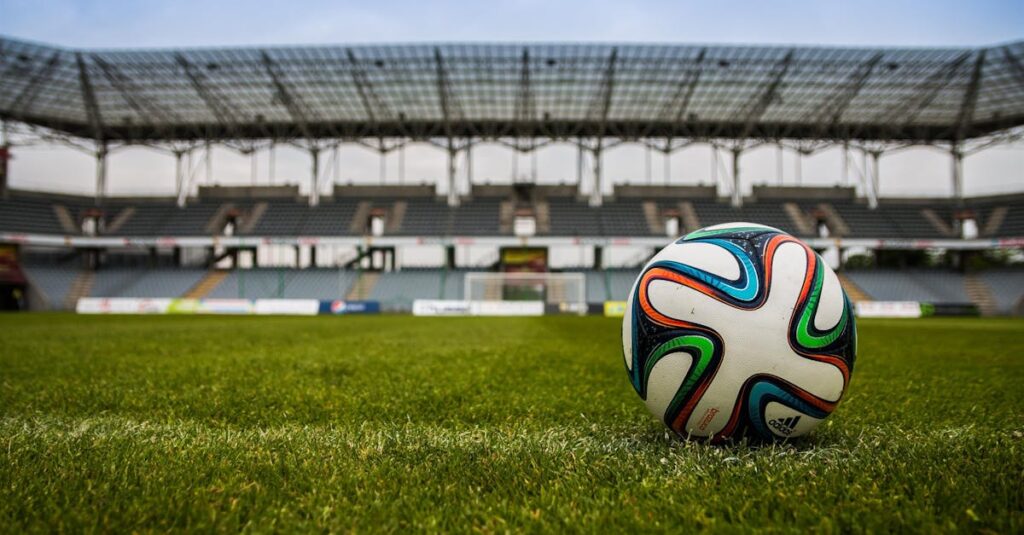
The Vector X Orion TPU Machine Stitched Football represents a significant advancement in football technology. This high-quality ball offers several key features that make it ideal for both training and match play:
- Machine-stitched construction: Ensures durability and consistent performance
- TPU (Thermoplastic Polyurethane) material: Provides excellent water resistance and longevity
- Versatile usage: Suitable for indoor and outdoor play
- Color combination: Attractive white and green design
Benefits for Players and Teams
- Consistent performance in various weather conditions
- Increased ball longevity, reducing replacement costs
- Suitable for multiple playing surfaces
- Improved ball control due to quality construction
The Vector X Orion TPU Machine Stitched Football exemplifies the ongoing evolution of football equipment in India. As the sport continues to grow in popularity and professionalism, high-quality balls like this play a crucial role in elevating the standard of play and training. This advancement in football technology aligns with India’s efforts to improve its football infrastructure and compete at higher levels internationally.
Growing popularity and fan base
Now that we have covered the structural improvements, it’s evident that football’s popularity in India is on the rise.
Football in India has a rich and diverse history, spanning over a century of passion, triumphs, and challenges. From its early beginnings during British colonial rule to the rise of Indian football in the mid-20th century, the sport has played a significant role in shaping the nation’s sporting landscape. Notable achievements, such as India’s golden era in the 1950s and 1960s, showcased the country’s potential on the international stage.
Despite facing numerous obstacles and a period of decline, Indian football has shown signs of revival in recent years. With increased investment, improved infrastructure, and a growing grassroots movement, the future of football in India looks promising. As the sport continues to evolve, products like the Vector X Orion TPU Machine Stitched Football exemplify the commitment to quality and innovation in Indian football equipment. By embracing its rich history and focusing on development at all levels, India has the potential to reclaim its position as a formidable force in the beautiful game.
Alleviate, Avoid, bargain, Best, Bonus, Budget, Buy, Cheap, Cheapest, Code with, Compare, Comparison, Coupon, Cure, Deal with, Deals, Discount, Discount code, Easily, Eliminate, End, Fast, Fix, For children, For couples, For girls, For guys, For kids, For men, For newbies, For sale, For seniors, For students, For women, Gain, Get rid of, Guide (s), Heal, How can I, How do I, How do you, How to, How to get rid of, How to make, Improve, Increase, Inexpensive, Learn, Low cost, Low priced, Method (s), Need, New, On sale, Order, Overcome, Plan (s), Prevent, Program(s), Protect, Purchase, Quick, Rebuild, Recover, Reduce, Reduced, Relieve, Remedy, Repair, Restore, Review, Reviews (s), Scam, Software, Solution, Solve, Technique, That Works, Top, Training, Treat, Vs, How to, Free, You, Tips, Blog post, Why, Best, Tricks, Great, Smart, Surprising, Science, History, Hacks, Huge / Big, Critical, Kill, Fear, Dark, Bleeding, War, You, Twitter, Please, Retweet, Post, Blog, Social, Free, Media, Help, Please Retweet, Great, Social Media, 10, Follow, How to, Top, Blog Post, Check Out, New Blog Post, Urgent, Breaking, Important, Alert, You, Free, Because, Instantly, New